06/28/2023
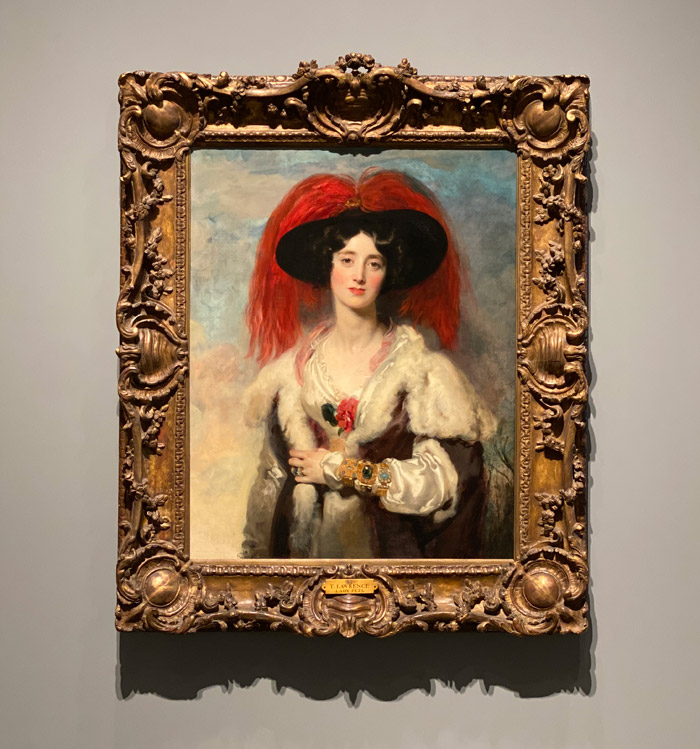
Julia, Lady Peel stands as a profound and sophisticated testament to the artistic genius of Sir Thomas Lawrence, a preeminent figure in the illustrious annals of Regency-era British painting. Renowned as the "painter in ordinary" to King George III and esteemed president of the royal academy in 1820, Lawrence's creative prowess was esteemed and revered by art critics of his time. The Frick Collection, which currently houses this astonishing masterpiece, noted it was considered "the highest achievement of modern art” by critics.
_by_Sir_Thomas_Lawrence%2C_PRA.jpeg)
In this captivating work, Lawrence skillfully portrays Julia Peel, a woman of aristocratic lineage and the esteemed wife of the revered British politician Robert Peel. Known for his ardent passion for the arts, Robert Peel commissioned numerous paintings from Sir Thomas Lawrence, and it is believed that Julia Lady Peel draws inspiration from a painting in his collection—a century-old masterpiece by Peter Paul Rubens, entitled Le Chapeau de Paille, featuring the enigmatic figure of Susanna Lunden.
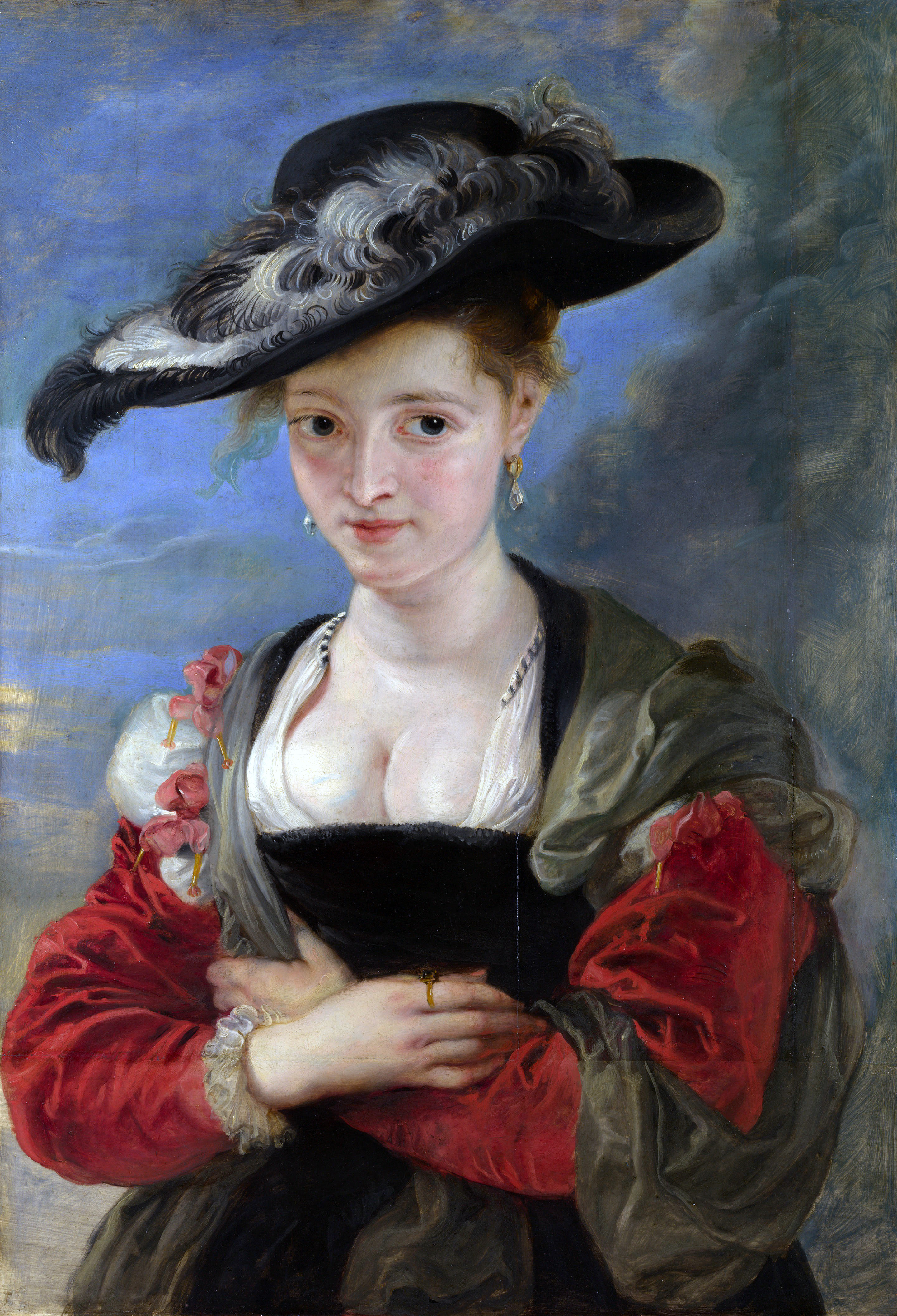
Upon beholding Julia, Lady Peel, one cannot help but discern striking parallels between Lawrence's composition and Rubens' earlier work. Both paintings feature flamboyant hats of felt and dramatic furs, accentuated by vibrant splashes of crimson that resound against a somber backdrop. Yet amidst these shared elements, subtle distinctions emerge. Susanna's body language exudes diffidence and meekness, as her arms tightly cross beneath her exposed décolletage, appearing uncertain or lacking confidence in her attire. Her gaze anxiously averts to the left, leaving only three-quarters of her face visible. She seems overpowered by the ostentation of her own appearance.
Conversely, Lady Peel's posture radiates dignity and elegance, standing tall and gazing directly into the viewer's eyes with a soft countenance. With one hand delicately veiling her body, she reveals rather than conceals. Her arms are adorned with exquisite bracelets, extending nearly to her elbows, and her ring finger is adorned with an opulent display of pearls, gold, and resplendent jewels.
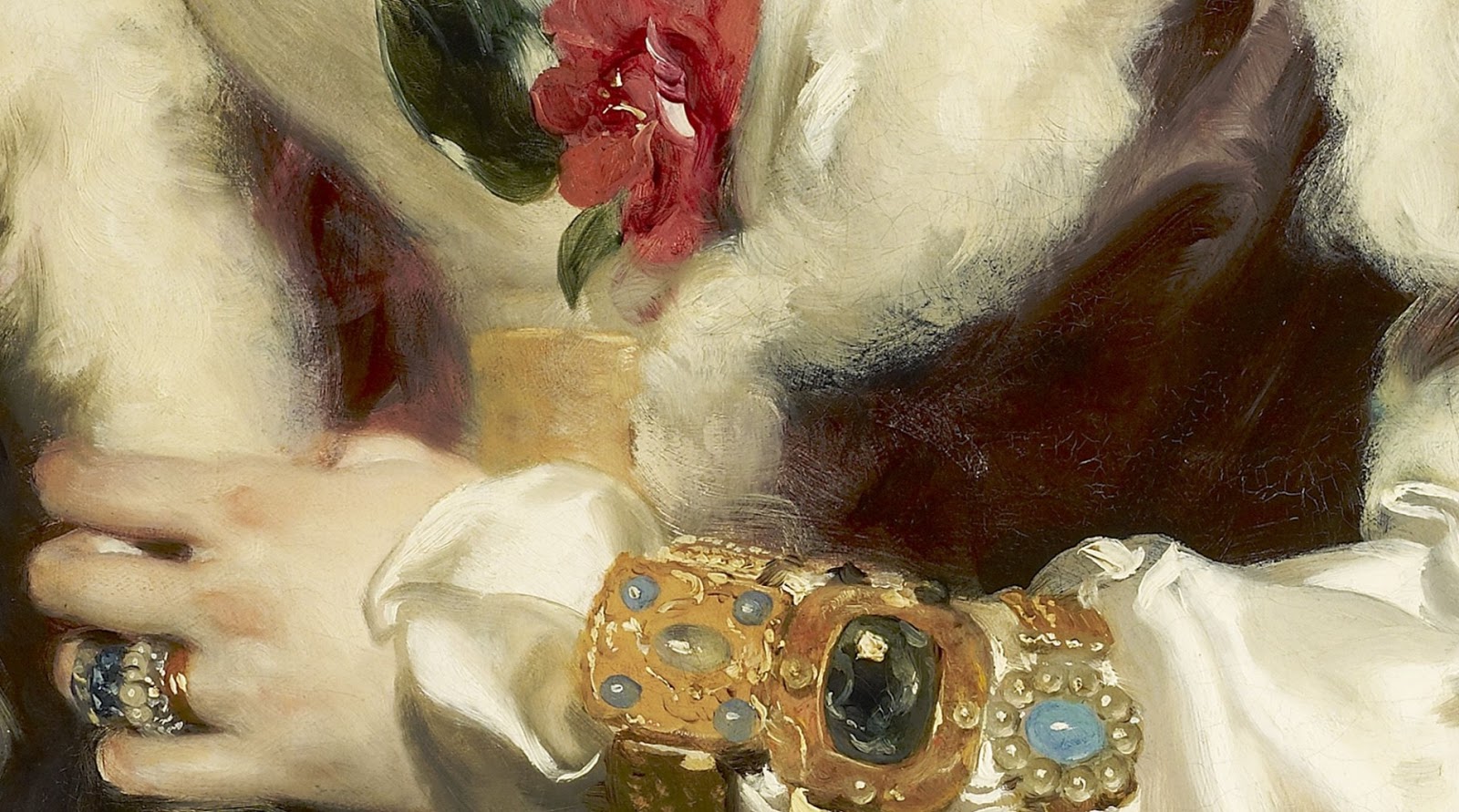
An air of effortlessness pervades Lawrence's linework, imbuing his creation with an inherent distinction from Rubens' style. As astutely observed by Aimee Ng, curator at the Frick, the brushstrokes possess an almost whimsical randomness, evocative of mid-twentieth-century abstract expressionism. Lawrence's delicate strokes yield a soft femininity, which permeates the entire painting. These gentle, nuanced lines give birth to a myriad of translucent and opaque variations, forming the foundation for the work's tonal values and contrasts.
Notably, the fur hat showcases the convergence of thick, translucent, and opaque lines, resulting in a luxuriously flowing appearance. Similar lines can be observed in the chiffon trim of Lady Peel's bodice and the fur trim on her coat. Numerous other elements of artistic expression converge within this painting. Lawrence masterfully employs form to signify Julia's elevated position within society, while simultaneously guiding the viewer's gaze toward the resplendent hat, which serves as a focal point. The light source emanates from the upper left corner of the composition, as evidenced by the luminosity bestowed upon the upper left portion of her visage.
A shadow delicately falls upon her neck, gradually intensifying as it cascades downward, thus creating an illusion of heightened stature and power—a common motif prevalent in the romantic-era paintings of the time. The color palette employed by Lawrence is rich and opulent, comprising hues of red, black, white, brown, beige, and gray. Even the cool tones, such as gray and blue, bear a subtle yellowish undertone. Collectively, these colors conjure a serene and tranquil ambiance, paradoxically juxtaposed against the extravagant and ostentatious.

Julia, Lady Peel by Sir Thomas Lawrence is a remarkable masterpiece that captivates viewers with its skillful composition and attention to detail. As one of the leading painters of his time, Lawrence showcased his artistic prowess in this portrait, capturing the essence of both the subject and the era. Inspired by Peter Paul Rubens' earlier work, Lawrence adds his own unique touch, infusing the painting with a sense of elegance and dignity. The contrasting body language of Julia Peel and Susanna Lunden reflects their respective personalities, while Lawrence's delicate linework and expert use of form and color bring the painting to life. The painting's rich contrasts and juxtapositions create a compelling visual narrative, hinting at the complexities of Julia Peel's character and the social context in which she existed. Overall, Julia, Lady Peel stands as a testament to Sir Thomas Lawrence's artistic genius and his ability to capture the essence of his subjects with grace and sophistication.

.jpeg)