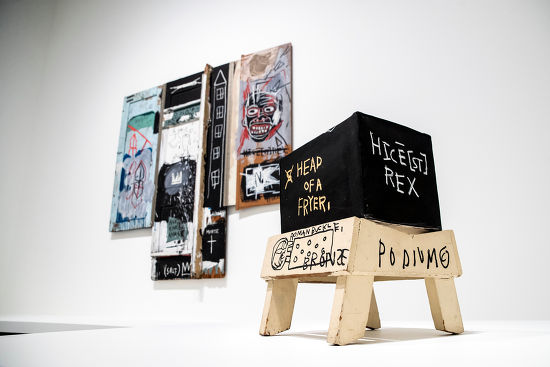
With every stroke, Jean-Michel Basquiat's 1981 masterpiece, Portrait of the Artist as a Young Derelict, immortalizes the spirit of a generation forgotten by society. Portrait of the Artist as a Young Derelict serves as a shrine, an emblem of tribute to the young 'derelicts' in Lower Manhattan.
Through Basquiat's stylized forms, historical symbols, jagged lines, and somber palette, the painting evokes a sense of mystery, highlighting the profound impact that the narrative tone can have on our perception of reality. In the 1980s, Manhattan suffered economically, causing wealthy New Yorkers to move to safer suburbs. As noted by cultural journalist Rachel Hope, the city's subway had the highest crime rate, leading to a perception that the fight against subway crime was failing. Affluent individuals opted for crime-free suburban areas, causing New York rents to drop.

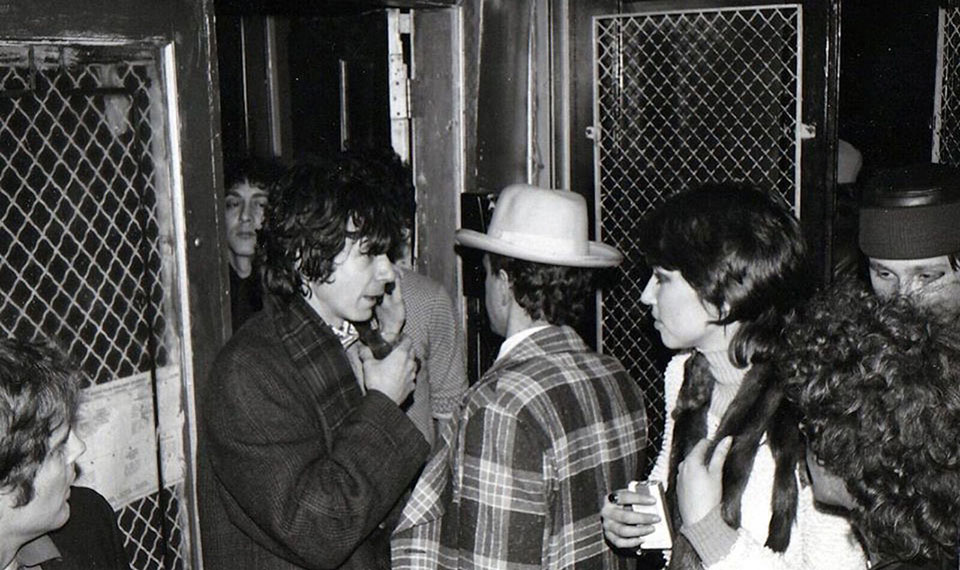
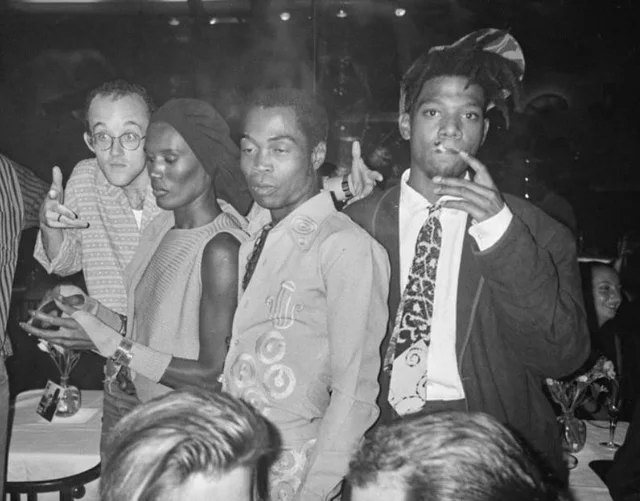
This affordability attracted artists, musicians, DJs, and bohemians to the city, resulting in a DIY cultural shift and vibrant nightlife. Lower Manhattan, including Soho and West Village, experienced an art renaissance with the influx of young creative individuals. Nightclubs like the Mudd Club, Studio 54, Palladium, and Club 57 flourished during this time.
Created in late 1982 at the age of 21, this painting showcases the artistic prowess of Basquiat himself. Executed with a combination of acrylic and oil paint, ink, and oil stick on wood, the artwork takes the form of a multi-paneled composition, skillfully constructed from wooden pieces and a graffitied toilet door, hinged and nailed together. With dimensions measuring 80x82 inches, its physical presence commands attention.
Originally featured at the FUN Gallery in November 1982, the painting channels themes of mortality and death, woven throughout its intricate design. Inspired by the structure of Renaissance altarpieces, which traditionally depict religious figures like Christ and Madonna, Basquiat's work adopts a similar shape. The left panel explores Basquiat's connection to his past as a graffiti artist, even as he transitions to working in a studio. Emphasizing his roots in SAMO, he incorporates a tagged bathroom door adorned with the iconic "s" symbol.

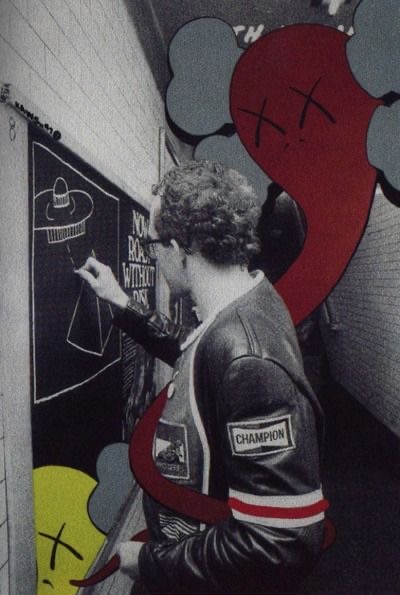
Despite his success, Basquiat continues to embrace and support graffiti culture. In the middle panel, the artist pays homage to Keith Haring, a renowned graffiti artist, through a carefully selected color palette. This painting serves as a heartfelt tribute to the entire graffiti art movement. Furthermore, Basquiat employs the word "Salt" in the artwork, alluding to the commodification of art and drawing parallels to the medieval trans-Saharan salt trade, where salt held both aesthetic and quantifiable value. Notably, Basquiat incorporates references aspects of the human body, particularly the heel and ankle, which may symbolize servitude or subjugation.
This remarkable painting by Basquiat captivates with its expressive and gritty nature. Jagged lines and scribbles intertwine throughout, evoking a sense of imperfection in a world that often demands perfection. In the middle right panel stands a tall white tower, while the middle panel showcases the striking phrase "The ankle." The artwork features multiple panels, each displaying its vibrant palette, with red, blue, and green dominating the left panel, black and white dominating the middle, and a face drawn on the right. Among the chaotic strokes, Basquiat's crown emerges, a symbol of his artistic identity. What sets this piece apart is its ability to engage the viewer endlessly, both visually and intellectually. Basquiat's unconventional penmanship, characterized by ragged lines, adds a human touch to his art, embracing the authenticity of imperfection.
Through this painting, Basquiat achieves a profound level of authenticity and stays true to his roots as a graffiti artist, even as he transitions to a renowned studio painter in Soho. In an art world often characterized by a desire to conform, Basquiat's allegiance to his true self stands as an achievement. His refusal to distance himself from his beginnings is particularly noteworthy in the context of black artists who are often pressured to assimilate into the dominant white culture. The painting emanates a gritty and seemingly careless quality that some might dismiss, yet it contributes to the overall sense of raw authenticity.
In conclusion, Jean-Michel Basquiat's Portrait of the Artist as a Young Derelict serves as a powerful testament to the cultural revival that took place in Lower Manhattan during the 1980s. This artwork captures the essence of the era, with its stylized forms, historical symbols, and somber palette. As Manhattan faced economic struggles and a rise in crime, wealthier residents moved away, leaving behind a city that seemed to be in decline. However, this decline became an opportunity for artists, musicians, and bohemians to embrace the city's affordability and create a vibrant cultural scene. Basquiat's painting embodies this spirit of revival, paying homage to his graffiti roots and celebrating the resilience and authenticity of the artistic community. Through his unconventional style and refusal to conform, Basquiat captured the raw and gritty nature of this artistic renaissance, leaving a lasting impact on the art world and the cultural landscape of Lower Manhattan. Portrait of the Artist as a Young Derelict stands as a testament to the power of art in transforming and revitalizing communities, serving as a reminder of the profound influence that creativity can have on society.

.jpeg)